
Sample size
How many people, and how many finished? Twelve volunteers and twelve hundred support very different statements. Small studies are normal early in a field — the point is to read them as what they are.
Six blend components and two named nutrients, each with its own research literature. This page is a reader's map to that literature, ingredient by ingredient.
The research that exists here sits at the ingredient level. Scientists have published on L-citrulline and nitric-oxide pathways, on L-carnitine as a nutrient, on pine bark extract, maca, grape polyphenols and saffron, and on niacin and zinc as established vitamins and minerals. Each body of work is about that ingredient under study, not about any finished multi-ingredient capsule.
Ingredient research. That is the honest frame, and it is worth setting out once before anything else on this page, because it governs how every line below should be read.
A published study on L-citrulline is a study of L-citrulline: a stated amount, given to a described group of people, for a set number of days, with chosen measurements. A capsule containing L-citrulline alongside five other components is a different object. Research about an ingredient tells you what scientists have been curious about and what they measured; it does not transfer to a finished product, and nobody who works with this literature treats it as if it did.
The Vigorus panel makes the distinction concrete. Two nutrients carry printed amounts — vitamin B3 as niacin at 20 mg and zinc as zinc oxide at 11 mg — and those are the two where you can compare a label figure directly against a reference intake. The six blend components sit inside one 570 mg total, listed in descending order by weight, so their individual amounts are not published. That is why this page points you to the research rather than placing a study beside a dose.
The seller's own framing — support for male potency and vitality, libido, healthy circulation and testosterone already within the normal range — is the seller's description of what the formula is intended to support. We quote it as theirs, and keep it separate from what the published literature on each plant and amino acid actually examines. The ingredient index gives each component its own page; the panel walkthrough has the printed figures.
L-citrulline is the first-listed component of the blend, which means it is the heaviest of the six. It is a non-essential amino acid found naturally in watermelon, and the reason researchers find it interesting is a metabolic route: the body converts citrulline to arginine, and arginine is the substrate from which nitric oxide is made. Nitric oxide is a signalling molecule involved in the relaxation of blood-vessel walls, which is why it sits at the centre of a great deal of vascular physiology.
That pathway is why citrulline shows up across several research literatures at once. Exercise scientists have studied it in the context of blood flow during effort and of exercise performance measures. Vascular researchers have studied citrulline and arginine supplementation in relation to endothelial function — how well the inner lining of blood vessels responds. Nutrition researchers have looked at absorption, comparing citrulline with arginine taken directly. Human trials in this area tend to be small and short, which is normal for amino-acid work and is simply a feature of the field rather than a judgement on it.
What a curious reader should take from it: this is a well-trodden pathway with a clear mechanism and an active literature. The PubMed search link in the table below opens that literature directly, newest first. Our page on the citrulline line stays closer to the label itself.
L-carnitine is the second component listed, and it occupies a different category from the botanicals around it: it is a nutrient the NIH Office of Dietary Supplements covers with a full health-professional fact sheet, which is the best single starting point for anyone reading up on it.
The biology is well established. Carnitine's known role is transporting long-chain fatty acids into the mitochondria, where they are oxidised to produce energy. The body synthesises it from lysine and methionine, and meat and dairy are the main dietary sources, so deficiency in healthy adults eating a mixed diet is uncommon. ODS sets out intake, the forms sold as supplements — L-carnitine, acetyl-L-carnitine, propionyl-L-carnitine — and the populations where carnitine status has been studied most closely.
Because the role is metabolic, the research literature is broad: energy metabolism, exercise physiology and recovery, and clinical nutrition in specific patient groups. An ODS fact sheet is also a good model for what careful reading looks like — it separates what is established about the nutrient from what individual trials have examined, and it says which is which. The detail sits on our carnitine page.
Pine bark extract from the French maritime pine, Pinus pinaster, is the third component on the panel and one of the more thoroughly described botanical extracts in the supplement world. Its interest to chemists is its composition: it is rich in procyanidins, a family of polyphenols also found in grape seed and cocoa, and standardised extracts of it have been produced for decades.
That long commercial history means a long paper trail. Researchers have examined pine bark extract in laboratory work on antioxidant chemistry, and in human studies of vascular and endothelial measures, circulation-related outcomes and, more recently, cognitive and metabolic markers. Reviews of this literature tend to note that trials vary considerably in extract preparation, dose and duration — which is a reason to read the methods section of any individual paper rather than the abstract alone.
Two practical notes for a reader. First, “pine bark extract” on a panel is not automatically the same preparation as the one used in a given study, because extracts differ in standardisation. Second, the Vigorus panel prints the species name, which is more information than many labels give. See the pine bark page for how that line reads in context.
Maca, Lepidium meyenii, is the fourth component, and it is unusual among the six in having its own plain-language summary from a US government body: the National Center for Complementary and Integrative Health publishes a dedicated page on it, which is where to start.
Maca is a root vegetable from the Peruvian Andes, eaten as a food there for centuries and dried and powdered for export. Researchers have taken an interest in its glucosinolates and macamides, and the human studies published to date cluster around energy, mood and sexual-function questionnaires, usually in small groups over several weeks. NCCIH summarises the state of that research and notes how limited the trial sizes have been — the honest shape of the field, and useful to know before you read a single enthusiastic abstract.
For a curious reader, maca is a good case study in how botanical research develops: long traditional food use first, chemistry second, controlled human trials third and still in progress. Our maca page keeps to the label line and the NCCIH summary.

Grape skin extract from Vitis vinifera is the fifth component, and it connects the panel to one of the largest research literatures in nutrition science: polyphenols. Grape skins carry anthocyanins, flavonols and stilbenes, resveratrol among them, and the chemistry of those compounds has been mapped in exhaustive detail.
Human research on grape polyphenols has looked at vascular measures, markers of oxidative stress and inflammation, and — because of the wine connection — cardiovascular epidemiology going back decades. Several distinctions matter when reading it. Grape skin, grape seed and whole-grape extracts have different polyphenol profiles. Isolated resveratrol studies are a separate literature again, often using doses far above anything a food or a general blend would supply. And bioavailability is an active research question in its own right, because many polyphenols are extensively metabolised before they reach circulation.
This is the ingredient where reading the exact preparation in a study's methods pays off most. The grape skin page sets out what the label itself states.
Saffron, the dried stigmas of Crocus sativus, is listed last of the six, which under US labelling rules means it is the lightest component by weight. It is also the one with the most rapidly expanding research literature of the group.
Its active compounds — crocin, crocetin, picrocrocin and safranal — are well characterised, and they are what give saffron its colour, aroma and bitterness. Over the past two decades researchers have run human trials of standardised saffron extracts with mood and sleep questionnaires as outcomes, alongside work on eye health and on sexual-function measures. Sample sizes are typically modest and durations commonly run six to twelve weeks, so individual trials are best read as contributions to a growing picture rather than as conclusions.
Saffron is also a useful illustration of why the order on a panel is worth noticing: being listed sixth tells you something real about proportion, even without a printed amount. Our saffron page covers the label line.
Every link below opens a live search or an authoritative summary — not a hand-picked abstract. Sort by date once you are there and read the methods section before the conclusion.
| Ingredient | What researchers look at | Where to read more |
|---|---|---|
| L-Citrulline | Conversion to arginine, nitric-oxide pathways, endothelial function, blood flow during exercise, absorption compared with arginine | PubMed: l-citrulline |
| L-Carnitine | Fatty-acid transport into mitochondria, energy metabolism, exercise and recovery measures, carnitine status in specific populations | NIH ODS fact sheet · PubMed: l-carnitine |
| Pine bark extract (Pinus pinaster) | Procyanidin chemistry, antioxidant measures, vascular and endothelial endpoints, differences between standardised extracts | PubMed: pinus pinaster bark extract |
| Maca root (Lepidium meyenii) | Glucosinolates and macamides, energy and mood questionnaires, sexual-function measures in small short trials | NCCIH: Maca · PubMed: lepidium meyenii |
| Grape skin extract (Vitis vinifera) | Anthocyanins, flavonols and stilbenes, vascular measures, oxidative-stress markers, polyphenol bioavailability | PubMed: vitis vinifera polyphenols |
| Saffron stigmas (Crocus sativus) | Crocin, crocetin and safranal chemistry, mood and sleep questionnaires, eye-health and sexual-function outcomes over 6–12 weeks | PubMed: crocus sativus |
| Vitamin B3 (Niacin) — 20 mg, 125% DV | An established essential vitamin: requirements, reference intakes, intake from food and supplements, the adult upper limit of 35 mg per day | NIH ODS: Niacin |
| Zinc — 11 mg, 100% DV | An established essential mineral: immune and enzyme roles, recommended intakes, absorption, the adult upper limit of 40 mg per day | NIH ODS: Zinc |
Each entry describes research about that ingredient. The amounts of the six blend components are not published individually, because the panel prints one 570 mg total for the blend.
This is a skill worth half an hour of practice, and it pays off on every health claim you meet afterwards. Open any paper from the table above and run through these in order.
How many people, and how many finished? Twelve volunteers and twelve hundred support very different statements. Small studies are normal early in a field — the point is to read them as what they are.
Two weeks, eight weeks, a year. Short trials can show whether something measurable happens; only long ones speak to what happens over a year of daily use.
Funding and competing-interest statements sit at the end of the paper, and reading them is habit practice rather than suspicion. An industry-funded trial can be well designed; you simply want to know.
Randomised, placebo-controlled and double-blind is the strong form. A single-arm study where everyone knew what they took answers a narrower question, and says so in its own methods.
Trained athletes, healthy young students, or men over 60 managing a condition? Findings travel poorly between populations, and the abstract rarely makes that obvious.
“Pine bark extract” and “maca” cover many preparations. The methods section names the extract, its standardisation and the daily amount — the three details that decide whether one study compares with another.
Research is not a prescription
Everything above describes research on individual ingredients, not on the finished capsule, and none of it is medical advice or a reason to change treatment. Vigorus is a dietary supplement for adults 18 and over; the label states it is not for use by those under 18 or by pregnant or nursing mothers. If you take nitrates, an erectile-dysfunction medicine, blood pressure medicine or a blood thinner, clear any new supplement with your prescriber or pharmacist first, and never stop or adjust a prescribed medicine on your own. New or worsening erection problems deserve a doctor's visit in their own right, because they can be an early sign of a circulation or hormone problem.
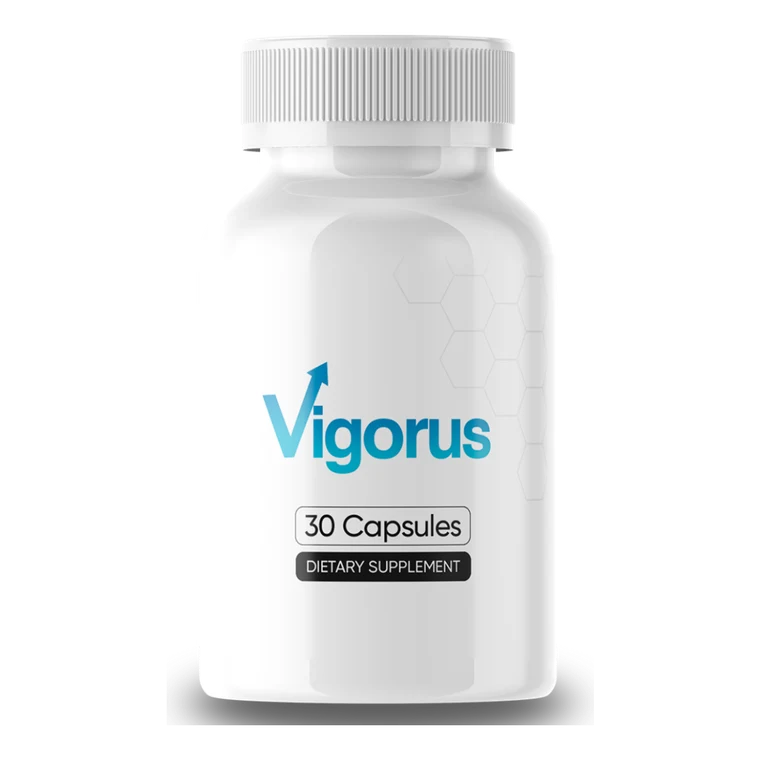
The panel, the package options and the guarantee the seller states all live on the seller's own order page, and the seller can change them. Open it to read what applies today.
Check Price & OrderView current pricing and available packages on the seller's website.
We may earn a commission if you purchase through our link. Affiliate disclosure. The link opens the seller’s website (Vigorus order page).
The research we point to is ingredient-level: published work on L-citrulline, L-carnitine, pine bark extract, maca, grape polyphenols, saffron, niacin and zinc. Those literatures are about each ingredient under study. A trial of a finished multi-ingredient capsule would be a separate undertaking, and we only cite what we can link you to.
Because the six blend components share one printed total of 570 mg, so their individual amounts are not published. Matching a study's daily amount to a label figure requires that figure to exist on the panel — which it does for niacin at 20 mg and zinc at 11 mg, and not for the blend components.
Niacin and zinc, by a wide margin, because they are established essential nutrients with decades of intake research and published reference values. Among the blend components, L-citrulline and L-carnitine have the largest human literatures, and saffron's is the fastest growing.
It is a permitted way of listing several components under one combined weight, with the components named in descending order by weight. US rules allow it, and it is common across the market. For a reader, the order is the information: L-citrulline is the heaviest of the six here and saffron the lightest.
The NIH ODS carnitine fact sheet, then the NCCIH page on maca. Both are written for careful readers rather than specialists, both state what is established and what is still being studied, and together they show you what a good summary of a supplement ingredient looks like.
It shows you the indexed biomedical literature, which is the right place to start and not the whole world of evidence. Sort by date, read a recent systematic review if one exists, and check the methods of any single trial before you lean on it.
Because mood, sleep, energy and sexual function are reported experiences, and validated questionnaires are the standard research instrument for measuring them. They are a genuine method with known limitations, and good papers name which instrument they used and why.
They are separate things, and we keep them separate. The seller describes the formula as intended to support male potency and vitality, libido, healthy circulation and testosterone already within the normal range — that is the seller's framing of its own product. The research above is about what scientists have measured in each ingredient.