
L-citrulline: what it is and where it sits on the Vigorus label
An amino acid best known from watermelon, printed first among the six blend components on the Vigorus panel — here is the plain description and an honest label reading.
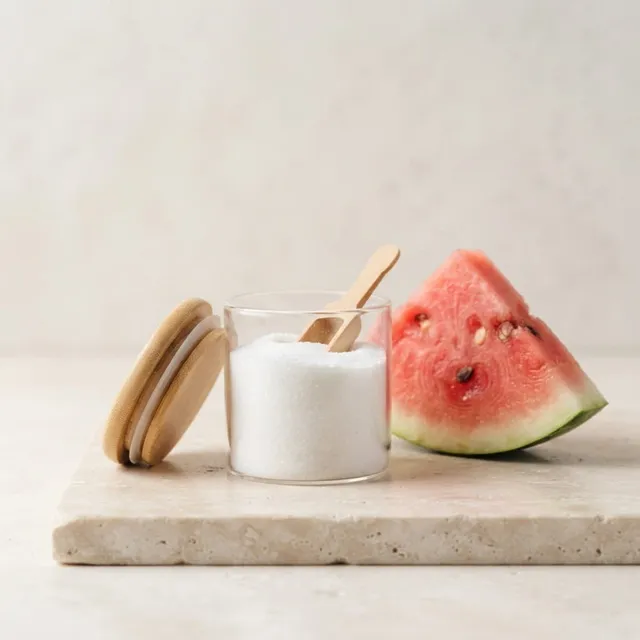
L-citrulline is an amino acid that the body converts into L-arginine, the raw material cells use to make nitric oxide. On the Vigorus label it is the first of six components listed inside a 570 mg proprietary blend, which places it at the head of that blend in label order. Watermelon is its best-known food source.
What is L-citrulline?
L-citrulline is a non-essential amino acid, meaning the body can make it rather than depending on food for every milligram. It takes its name from Citrullus lanatus, the watermelon, where chemists first isolated it.
Inside the body, citrulline belongs to the urea cycle, the route the liver uses to clear nitrogen. The kidneys convert a share of circulating citrulline into L-arginine, and arginine is what cells draw on to produce nitric oxide — the signalling molecule that tells the smooth muscle in blood vessel walls to relax.
The forms used in supplements
Two forms appear on panels. Free-form L-citrulline is the amino acid on its own; citrulline malate pairs it with malic acid, which adds weight to the printed figure. Vigorus lists L-Citrulline — the free-form name, with no malate suffix. Supplement-grade material is normally made by fermentation rather than pressed from fruit, and arrives as a white, faintly sweet powder.
How much L-citrulline is in Vigorus?
The Vigorus Supplement Facts panel prints a single figure for the whole proprietary blend — 570 mg — and lists its six components beneath it, so the amount of L-citrulline on its own is not published. That is the standard way a proprietary blend is written in the United States: the rules let a manufacturer group components under one total, and the individual numbers stay with the formulator.
What the panel does give you is position. L-citrulline is printed first of the six, ahead of L-carnitine, pine bark extract, maca root extract, grape skin extract and saffron stigmas extract. US labelling convention lists ingredients in descending order of weight, so the first name in a blend is the one present in the largest amount.
We stop there rather than estimating; dividing 570 by six would be arithmetic, not a label value. Our transcription of the full panel shows every line we could read off the artwork.
L-citrulline at a glance
| What it is | A non-essential amino acid and a precursor to L-arginine |
| Where it comes from | Watermelon flesh and rind; supplement material is usually made by fermentation |
| On the Vigorus label | First of six components inside the 570 mg blend; the per-component amount is not printed |
| Upper limit | No Tolerable Upper Intake Level has been established for citrulline |
| Ask a doctor first if | You take nitrates, an erectile-dysfunction medicine, blood-pressure tablets or a blood thinner |
Read from the label artwork supplied by the advertiser, checked 29 November 2026.
What researchers study about L-citrulline
Researchers have mostly approached citrulline through the arginine route: whether taking it raises plasma arginine, and whether that shift shows up in measures such as blood flow, vascular stiffness or exercise output. Much of that work sits in sports science. A second strand belongs to clinical nutrition, where citrulline is examined in people whose small intestine absorbs amino acids poorly.
One point is worth holding onto. Studies of this kind examine the ingredient on its own, at amounts the researchers chose, and they are not studies of a finished multi-ingredient capsule such as Vigorus.
To read the primary literature rather than a summary of it, a PubMed search for l-citrulline returns the indexed trials and reviews in one list.

Watermelon, rind and the dietary route to citrulline
Watermelon is the reason most people have heard of citrulline at all. The red flesh contains it, and the pale rind just inside the green skin carries more per gram than the sweet centre — which is why chemists measuring citrulline juice the whole fruit rather than the part you would normally eat.
- Watermelon flesh and, in greater concentration, the pale rind
- Cucumber, pumpkin and related gourds, in smaller amounts
- Fermentation-derived powder — what a supplement panel almost always means
No recommended daily intake exists for citrulline, because the body produces its own. Fruit and capsules are therefore not interchangeable in any measurable way; they simply share a molecule.
Who should check with a doctor before taking L-citrulline
Anyone already on medication that acts on blood vessels has a clear reason to ask first. Nitrates prescribed for chest pain, erectile-dysfunction medicines of the sildenafil family and blood-pressure drugs all work on the relaxation pathway citrulline feeds, so combining them is a question for a prescriber.
The label carries the maker's own caution: do not exceed the recommended dose, not for anyone under 18 or for pregnant or nursing mothers, and consult a physician before use. Our notes on tolerance and interactions go through those situations, and the safety page covers who the label excludes.
Take the bottle, or a photograph of the panel, to the appointment — a pharmacist reads a blend list far faster than a description of one.
Check with a clinician before combining it with anything
Taking nitrates, an erectile-dysfunction medicine, blood-pressure tablets or a blood thinner? Ask your doctor or pharmacist before adding any capsule containing L-citrulline. These products are for adults 18 and over, not for pregnancy or nursing. And new or worsening erection problems deserve an appointment in their own right: they can be an early sign of a circulation or hormone problem.
L-citrulline questions readers ask
Is L-citrulline the same thing as L-arginine?
No — two different amino acids, though linked, because the kidneys convert citrulline into arginine. That is why citrulline is called an arginine precursor. Panels list them separately.
How much L-citrulline does one Vigorus capsule contain?
The panel does not publish it. Vigorus prints one 570 mg total for its proprietary blend and names six components underneath, L-citrulline first. A per-component figure would have to come from the brand or the seller.
Is L-citrulline a stimulant?
No. It is an amino acid, not a stimulant, and it carries no caffeine. Readers avoiding stimulants often scan an ingredient list for exactly that reason.
Can I get citrulline from watermelon instead of a capsule?
Watermelon is the best-documented dietary source, with more per gram in the pale rind than the red flesh. Food and supplements are not measured against each other, so treat them separately.
Does L-citrulline have to be taken with food?
The Vigorus instruction is one capsule daily, with no food requirement printed. Our dosage notes cover the timing questions readers send in most often.
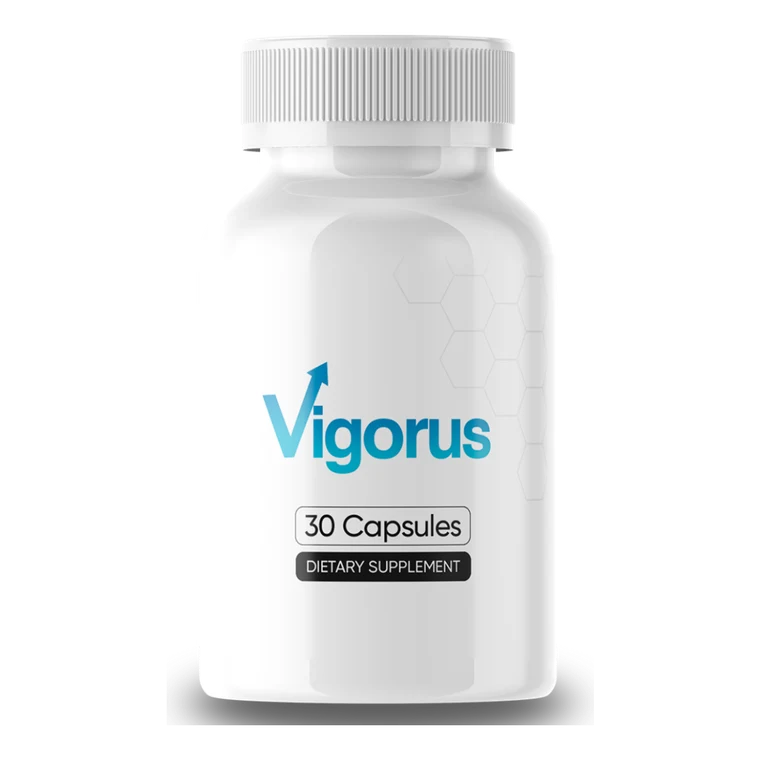
See what the Vigorus seller is offering today
Package options, shipping terms and the seller's stated 60-day money-back policy live on the seller's own order page and can change. Open it to read today's terms.
Check Price & OrderView current pricing and available packages on the seller's website.
We may earn a commission if you purchase through our link. Affiliate disclosure. The link opens the seller’s website (Vigorus order page).
Sources for this page
- PubMed — search results for l-citrulline — indexed trials and reviews on the ingredient itself, sortable and filterable
- NIH ODS — Dietary Supplements: What You Need to Know — how US supplement labels are regulated and what a Supplement Facts panel must show
- NCCIH — Using Dietary Supplements Wisely — how to raise a supplement with a clinician and how to read ingredient claims
- FDA — Dietary Supplements — the agency's description of how supplements reach the market