
Skip to content
Vigorus360 Independent review · United States

Vigorus and Walmart: the shelf, the website and the pharmacy counter

Three separate questions get muddled into one here. This page takes them apart: what sits on a store shelf, what sits on the website, and what a pharmacy team is actually able to tell you.

As of 29 November 2026 we have no confirmation that Vigorus is stocked at Walmart, in a store or on walmart.com, and no confirmation that it is absent either. We will not state either one. The route we verified leads to the seller's own order page, and below is how to settle the shelf question yourself.

Is Vigorus stocked at Walmart?

Our answer is that we do not know. We looked on 29 November 2026 and came away without evidence we would be willing to print as fact in either direction. That is an unsatisfying sentence to read, and it is still the correct one: an assistant who tells you a product is on a shelf has sent you on a wasted drive, and one who tells you it is not there has stopped you asking a question that might have had a yes behind it.

What we can describe precisely is the brand's distribution. The label names Vigorus of Aurora, Colorado as the distributor, and the purchasing route we were able to follow is the seller's own order page, where the buyer selects a package and completes the checkout. That walkthrough lives on our where to buy page.

In store and walmart.com are two different questions

Shoppers treat the brand as one place. Retail does not. A big-box chain runs a physical assortment chosen store by store and region by region, and separately runs a website that carries both its own inventory and a large marketplace of outside sellers. A product can be on the website and in no store at all. It can be in a handful of stores in one state and nowhere else. And a website result can belong to an independent seller the chain never bought anything from.

What the website tells you

On the site, the line to read is the one naming who sells and who ships the item. A chain-owned item behaves like store inventory, with the chain's own returns rules. A marketplace item belongs to a third party, with its own terms attached, and that distinction decides who you talk to if the order goes wrong. The same logic, and the signals that separate the two, are laid out on our marketplace page.

What the store tells you

In store, the only reliable answer comes from the shelf itself or from an associate with a scanner. A product that has never been bought by the chain's buying team has no item number in their system, so a search will come back empty — which is a statement about the chain's purchase orders, not about the bottle.

Men's health supplements and how people choose them: a mixed group of adults talking around a table

How supplement shelf space works in US chains

The men's health bay in an American store is not a free-for-all. It is a planogram: a diagram drawn months in advance that assigns every facing to a specific item. Getting onto that diagram involves a chain of commitments that has very little to do with how good a formula is.

  • A buyer and a category review. Supplement assortments are reviewed on a cycle, often annually. Outside that window, the diagram does not change.
  • A distributor relationship. Most chains will not take deliveries direct from a one-product brand. A distributor or broker has to carry the line.
  • Listing and slotting costs. Space is paid for, in fees, promotional allowances and guaranteed-sales terms.
  • Volume across every door. A national planogram means keeping thousands of stores in stock without gaps, which needs warehouse depth a startup brand rarely has.
  • A category captain's influence. The largest supplier in a bay often advises on the diagram, and it is not in that supplier's interest to recommend space for a newcomer.

Put together, that is why a great many supplements advertised online — including well-known names you would recognise — never appear in retail at all. Selling direct skips every step on that list. One website, one fulfillment center, no slotting fees, no category review. It is a deliberate business model, and an empty shelf is its predictable consequence rather than a verdict on the product.

What a pharmacy team can and cannot tell you

A pharmacist is one of the most useful people you can talk to about a supplement, and one of the least useful people to ask about a direct-to-consumer brand's distribution. Knowing which question to put to them is the whole trick.

Can: check interactions with your medicines

This is the real reason to walk up to the counter. Bring your medication list and the ingredient list, and ask about niacin, zinc, L-citrulline and the botanicals. A pharmacist can tell you where an added effect on circulation or clotting deserves care.

Can: read a Supplement Facts panel with you

Hand over a photograph of the panel, or our transcription, and ask what the nutrient forms and the single blend total mean. Reading panels is habit work for them.

Cannot: confirm whether a brand is legitimate

Pharmacy staff have no visibility into a company that has never sold through their distributor. An honest “I have not heard of it” means exactly that and nothing more.

Cannot: tell you why a brand is not stocked

Assortment decisions are made by buyers at head office, not in the store. Nobody behind the counter knows whether a brand was rejected, never applied, or chose to sell direct.

A short script for asking at the counter

Four sentences, in this order. It keeps the conversation on the ground where a pharmacist is genuinely expert, and it takes about three minutes of their time.

  1. 1Open with the stock question, plainly“Could you check whether you carry a supplement called Vigorus? I think it may only be sold online, but I would rather ask than guess.” The second clause saves everyone a search through the wrong aisle.
  2. 2Move straight to the useful question“Either way, could I ask you about the ingredients? I take these medicines” — and show the list on your phone, including doses. Volunteering the list is what turns a shrug into advice.
  3. 3Show the panel and name the components“It is one capsule a day: niacin at 20 mg, zinc as zinc oxide at 11 mg, and a 570 mg blend of L-citrulline, L-carnitine, pine bark, maca, grape skin and saffron. The blend components are listed without individual amounts.”
  4. 4Ask the two questions that matter“Is there anything here that would interact with what I take, particularly for blood pressure or circulation? And is there anything you would want me to mention to my doctor first?” Write down what they say before you leave.
Men's health after fifty: an active man in his fifties outdoors on a bright day

What each answer actually tells you

Four plausible outcomes of the counter conversation, and what each one is worth. Reading them correctly keeps you from drawing a conclusion the answer does not support.

What you hearWhat it meansWhat to do next
“Nothing comes up in our system”This chain's buying team has no purchase order for the brand. It is a fact about the retailer's catalogue, nothing more.Use the seller's own order page, which is the route described on our where to buy page.
“I have never heard of it”The brand does not sell through pharmacy distribution. Common for direct-to-consumer supplements and expected for a newer label.Keep the conversation going on the ingredients, which is the part they can genuinely help with.
“Check with your doctor before you take that with your medication”The most valuable sentence in the exchange, and the one worth travelling for.Do it. Take the ingredient list to the appointment and read the caution on our side effects page beforehand.

Notice that none of the four answers tells you anything about the quality of the product. That question is answered by the label and the seller's terms, not by a scanner.

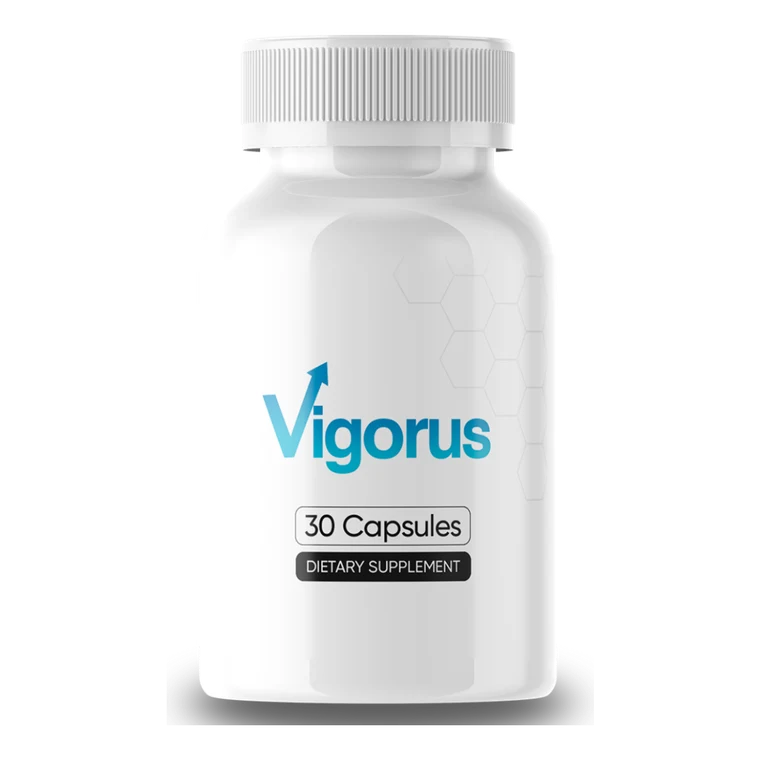
Vigorus capsules: white bottle with the teal Vigorus logo, 30 capsules, dietary supplement

The route we were able to confirm

On 29 November 2026 the order route we verified was the seller's own order page, where the packages, the shipping terms and the guarantee wording are set by the seller and can change. Read that page before you commit to anything.

Check Price & Order

View current pricing and available packages on the seller's website.

We may earn a commission if you purchase through our link. Affiliate disclosure. The link opens the seller’s website (Vigorus order page).

Vigorus at Walmart: questions people ask

Can I pick up Vigorus at my local Walmart?

We cannot confirm that you can, and we cannot confirm that you cannot. Nothing we found on 29 November 2026 settles it. The honest way to find out locally is to ask an associate to run the brand name through the store's system, which gives a definitive answer about that chain's inventory.

Is Vigorus listed on walmart.com?

We have no confirmation either way. If you search and find a result, read the line naming who sells and ships it. A chain-owned item follows the retailer's own returns rules; a marketplace item belongs to an outside seller with its own terms, which changes who you deal with afterwards.

Why would a supplement not be in a big chain at all?

Because shelf space runs on planograms, distributor relationships, listing fees and volume commitments set months ahead. A brand selling one product from one website is not part of that process. Many supplements people know from advertising have never been in retail, by design.

Will the pharmacist know if Vigorus is any good?

Not about the brand, no — they have no visibility into a company that never sold through their distributor. What they can do is read the Supplement Facts panel with you and flag where the ingredients deserve care alongside your own prescriptions. That is the question worth bringing them.

What should I actually ask at the counter?

Ask the stock question once, then move to interactions. Show your medication list and the ingredients: niacin, zinc, L-citrulline, L-carnitine, pine bark, maca, grape skin and saffron, taken as one capsule a day. Then ask whether anything there should be raised with your doctor first.

Is buying online instead of in store less safe?

It changes what you check rather than how safe it is. In a store you can see the seal and the bottle before you pay. Online, you check the seller's terms first and the bottle on arrival, against the lines listed on our where-to-buy page. Both routes work if you do the matching check.

Sources

  1. NIH Office of Dietary Supplements — Dietary Supplements: What You Need to Know — the questions a consumer should settle before buying any supplement, wherever it is sold, and what the label is required to carry
  2. NCCIH — Using Dietary Supplements Wisely — how to raise a supplement with a pharmacist or physician, and what to bring to that conversation
  3. FDA — Dietary Supplements — the regulatory background to why a supplement needs no pre-market approval and therefore no retail gatekeeper

Keep reading