
Niacin (vitamin B3): the 20 mg line printed on the Vigorus panel
This is one of only two lines on the whole label that carries an exact amount, which makes it the easiest entry on the panel to check and to compare.
Niacin is vitamin B3, an essential nutrient the body uses to build NAD and NADP, the coenzymes that drive hundreds of energy-releasing reactions in cells. Vigorus prints it as a separate line above the proprietary blend at 20 mg, 125% of the Daily Value — one of only two exact amounts on the panel.
What is niacin?
Niacin is a water-soluble B vitamin that the body cannot store in any quantity, so a regular intake matters. Cells convert it into nicotinamide adenine dinucleotide — NAD — and its phosphate form NADP, which act as the electron carriers in the reactions that release energy from food.
Food supplies it widely: beef and poultry liver, chicken breast, tuna, salmon, turkey, peanuts, brown rice and enriched grains all contribute, which is why the enrichment of flour and cereals in the 1940s effectively ended pellagra in the United States.
The body also makes a small amount from tryptophan, an amino acid in protein — which is why intakes are expressed in niacin equivalents, written NE.
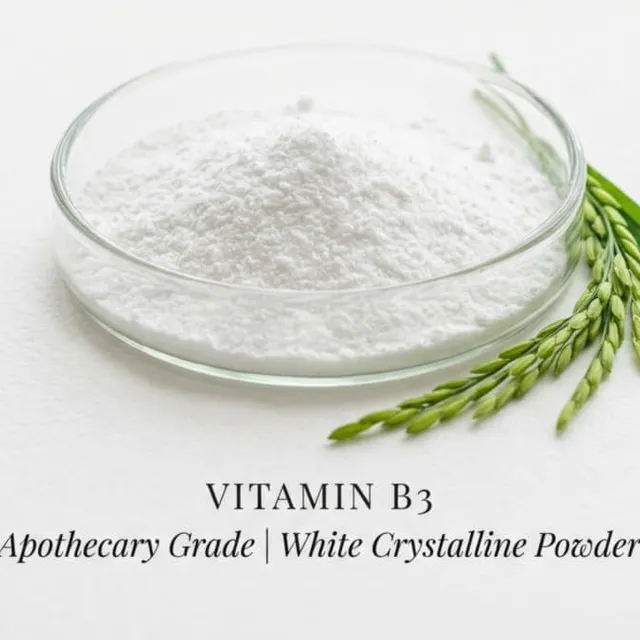
How much niacin is in Vigorus, and what does 125% DV mean?
The panel prints Vitamin B3 (as Niacin) 20 mg · 125% DV. Unlike the six blend components, this is an exact, published figure, and so is the zinc line beneath it.
The percentage is the useful part. The Daily Value is a single reference figure the FDA sets for labelling purposes, so that any product can be compared with any other on the same scale; for niacin it is 16 mg NE for adults. Twenty milligrams against a 16 mg reference comes to 125%, which is what the panel shows.
A Daily Value is a labelling yardstick for the general adult population, not a personal prescription, and a figure above 100% simply means the serving supplies more than that reference. For context, NIH ODS sets the Tolerable Upper Intake Level for adults at 35 mg a day of supplemental niacin. Our full panel reading puts both exact lines and the blend total side by side.
Niacin at a glance
| What it is | Vitamin B3, an essential water-soluble vitamin and precursor to NAD and NADP |
| Where it comes from | Poultry, beef, fish, peanuts, brown rice and enriched grains; also made from tryptophan |
| On the Vigorus label | A separate line above the blend: 20 mg, 125% DV — an exact, published amount |
| Upper limit | NIH ODS sets the Tolerable Upper Intake Level for adults at 35 mg per day |
| Ask a doctor first if | You take a statin, diabetes medication, blood-pressure tablets, or high-dose niacin on prescription |
Amount and % Daily Value read from the label artwork supplied by the advertiser, checked 29 November 2026.
What researchers study about niacin
Niacin has one of the longest research records of any nutrient, and the NIH Office of Dietary Supplements gathers it in a fact sheet for health professionals. The main threads are requirements and deficiency, where pellagra is the classic end point; blood lipids, where prescription doses far above dietary intakes have been studied for decades; and NAD metabolism, now an active field in ageing biology.
One distinction keeps that literature readable: studies at gram-level prescription doses are a different subject from the amounts on a supplement panel, and the two should not be read across to each other.
This research also concerns niacin as a nutrient in its own right, not any finished multi-ingredient capsule — a line we hold on every ingredient page here.

Flushing, and the difference between niacin and niacinamide
"Vitamin B3" covers two forms that behave differently in the body, and label wording distinguishes them.
- Niacin, also called nicotinic acid, is the form Vigorus prints. At higher intakes it can produce the niacin flush — a temporary warmth, redness and tingling across the face, neck and chest, caused by blood vessels near the skin widening.
- Niacinamide, also called nicotinamide, is the amide form. It does not cause the flush, which is why it is the usual choice in multivitamins and in skincare.
Both serve the same nutritional role; the flush is the practical difference people notice. NIH ODS sets the adult upper limit of 35 mg a day on the basis of flushing, associating the effect with intakes above that level rather than with dietary amounts. Where it occurs it is uncomfortable rather than dangerous, and it passes.
If you react to B vitamins generally, that is worth raising with a pharmacist before starting anything new.
Who should check with a doctor before taking niacin
Tell a clinician if you already take prescription niacin for cholesterol, because the amounts involved there are far larger. The same applies if you take a statin, diabetes medication — niacin can affect blood glucose — or blood-pressure treatment. Liver disease, gout and active stomach ulcers are all reasons to ask first.
The bottle's caution stands alongside that: adults 18 and over, not for pregnant or nursing mothers, and a physician's advice first if you take a medication. Our interactions page goes further, and the safety page lists who the label excludes.
Worth checking before the first capsule
Speak to a doctor or pharmacist first if you take nitrates, an erectile-dysfunction medicine, blood-pressure tablets, a blood thinner or prescription niacin. These capsules are for adults 18 and over and are not for pregnancy or nursing. Separately, new or worsening erection problems deserve a medical appointment of their own: they can be an early sign of a circulation or hormone problem.
Niacin questions readers ask
How much niacin does one Vigorus capsule provide?
Twenty milligrams of vitamin B3 as niacin, shown on the panel as 125% of the Daily Value. It is one of the two lines printed with an exact amount.
What does 125% DV actually mean?
The Daily Value is a labelling reference, 16 mg NE for niacin in adults, used so products can be compared on one scale. Twenty milligrams works out at 125% of it.
Is niacin the same as niacinamide?
Both are vitamin B3, but they are different compounds. Niacin can cause flushing at higher intakes; niacinamide does not. The Vigorus label specifies niacin.
What is the upper limit for niacin?
NIH ODS sets a Tolerable Upper Intake Level of 35 mg a day for adults, based on supplemental and fortified sources rather than on food.
Can I take niacin on an empty stomach?
The Vigorus direction is one capsule daily and prints no food requirement. Readers who prefer taking B vitamins with a meal often do; our dosage page covers timing.
Check the current Vigorus offer at the seller
Packages, shipping and the seller's stated 60-day money-back policy are published on the seller's own order page, and they can change without notice.
Check Price & OrderView current pricing and available packages on the seller's website.
We may earn a commission if you purchase through our link. Affiliate disclosure. The link opens the seller’s website (Vigorus order page).
Sources for the niacin figures
- NIH ODS — Niacin (Health Professional fact sheet) — requirements, food sources, the 35 mg adult upper limit, flushing and medication interactions
- NIH ODS — Dietary Supplements: What You Need to Know — what % Daily Value on a Supplement Facts panel represents and how to use it
- NCCIH — Using Dietary Supplements Wisely — how to raise a vitamin or supplement with the clinician who manages your medication
- FDA — Dietary Supplements — the labelling rules behind Daily Values and Supplement Facts panels