
Zinc oxide on the Vigorus label: 11 mg and what 100% DV covers
The second of the two exact amounts on this panel, printed with the chemical form in brackets — which tells you more than the milligram figure does on its own.
Zinc is an essential trace mineral involved in the activity of hundreds of enzymes, in immune function, protein synthesis, wound healing and the senses of taste and smell. Vigorus prints it above the proprietary blend as Zinc (as Zinc Oxide) 11 mg · 100% DV, naming both the amount and the chemical form used.
What is zinc, and why is it on the label?
Zinc is a trace mineral: the body needs it in milligrams rather than grams and has no dedicated storage depot, so intake has to be reasonably steady. Something like 300 enzymes depend on it, along with a large family of proteins that use zinc to hold their shape while binding DNA.
NIH ODS describes its roles in immune function, protein and DNA synthesis, wound healing and normal growth and development, and notes that it is also required for taste and smell.
Oysters hold far more per serving than any other common food; beef, crab, pork, beans, nuts, whole grains, dairy and fortified cereals make up most ordinary intake. The recommended intake is 11 mg a day for adult men and 8 mg for women.
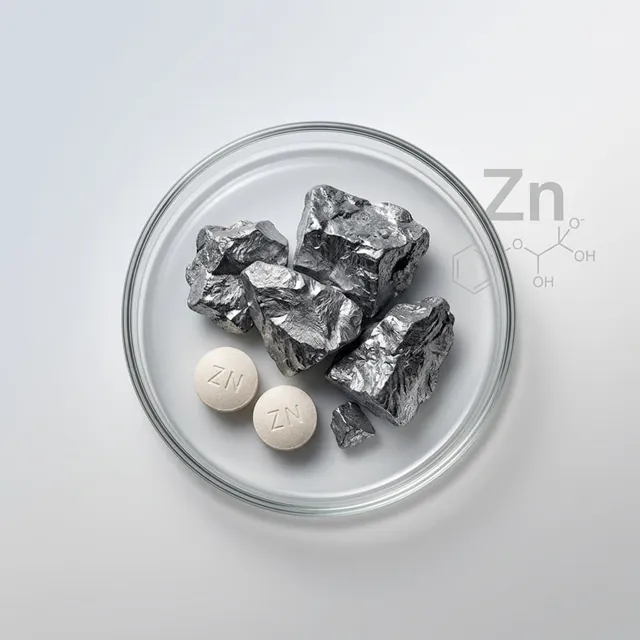
How much zinc is in Vigorus, and what does 100% DV mean?
The panel prints Zinc (as Zinc Oxide) 11 mg · 100% DV. Like the niacin line above it, this is an exact published figure rather than part of the 570 mg proprietary blend.
The Daily Value for zinc is 11 mg, the reference the FDA uses for adult labelling, so a serving supplying 11 mg reads as 100%. The DV is a comparison scale, not a personal target: it exists so two labels can be read against each other, and an individual requirement depends on age, sex, diet and medical history.
One detail repays attention. Where a label names a form in brackets, as this one does, the milligram figure refers to elemental zinc — the mineral itself — not to the heavier weight of the zinc oxide compound. See our reading of the full panel for both exact lines together.
Zinc at a glance
| What it is | An essential trace mineral used by roughly 300 enzymes |
| Where it comes from | Oysters, beef, crab, pork, beans, nuts, whole grains, dairy and fortified cereals |
| On the Vigorus label | A separate line above the blend: 11 mg as zinc oxide, 100% DV — an exact amount |
| Upper limit | NIH ODS sets a Tolerable Upper Intake Level of 40 mg per day for adults, all sources counted |
| Ask a doctor first if | You take quinolone or tetracycline antibiotics, penicillamine or a thiazide diuretic |
Amount, form and % Daily Value read from the advertiser's label artwork, checked 29 November 2026.
What researchers study about zinc
Zinc has a large, well-organized research record, and the NIH Office of Dietary Supplements fact sheet is the practical entry point: requirements, US intakes, groups at risk of inadequacy and medication interactions, with the primary references attached.
Recurring subjects include immune function and the duration of the common cold, wound healing, zinc status in older adults and vegetarians, age-related eye disease, and the zinc-copper balance when intakes stay high for a long time.
As on every page here, that work examines zinc as a nutrient on its own, and is not research into any finished multi-ingredient capsule.

Zinc oxide compared with the other zinc forms
Supplement labels carry zinc in several chemical forms, and the bracket on a panel tells you which one you are holding:
- Zinc oxide — widely used in multivitamins and in food fortification; it carries a high proportion of elemental zinc by weight and dissolves in stomach acid rather than water
- Zinc gluconate, sulfate, acetate, citrate and picolinate — salts and chelates sold alone and in combination products
On the comparison people most want settled, NIH ODS is direct: research has not determined whether differences exist among the forms of zinc in absorption, bioavailability or tolerability. Better established is that absorption depends on the rest of the meal — phytates in whole grains and legumes bind zinc, while protein helps.
Because the label states elemental zinc, 11 mg here means what 11 mg means anywhere else. And zinc already reaches many people through a multivitamin or a fortified cereal, so adding up every source before starting something new is the sensible move — the theme of our supplement safety checklist.
Who should check with a doctor before taking zinc
Medication timing is the common issue. Zinc and quinolone or tetracycline antibiotics interfere with each other's absorption in both directions, so prescribers usually separate the doses by a couple of hours. Penicillamine is affected the same way, and thiazide diuretics increase urinary zinc losses.
Long-term high intakes are the other thing to raise, since sustained excess zinc can lower copper status — which is why the 40 mg adult limit counts every source together. The label's caution closes the list: adults 18 and over, not for pregnant or nursing mothers, and a physician's advice first if you take a medication. Our page on interactions and safety overview set that out in full.
Check this one against your other sources of zinc
Ask a doctor or pharmacist first if you take nitrates, an erectile-dysfunction medicine, blood-pressure tablets, a blood thinner, or quinolone or tetracycline antibiotics. Count any multivitamin too, since the 40 mg adult limit covers all sources. These capsules are for adults 18 and over, not for pregnancy or nursing, and new or worsening erection problems deserve an appointment of their own.
Zinc questions readers ask
How much zinc does one Vigorus capsule contain?
Eleven milligrams of zinc, supplied as zinc oxide, shown on the panel as 100% of the Daily Value — an exact figure, printed outside the blend.
Is 11 mg the weight of the zinc oxide or of the zinc itself?
Of the zinc itself. When a panel names the form in brackets, the milligram figure refers to elemental zinc, which makes it comparable across labels.
Is zinc oxide a good form of zinc?
NIH ODS states that research has not determined whether the common supplement forms differ in absorption, bioavailability or tolerability. Zinc oxide is among the most widely used.
Can I take zinc with my multivitamin?
Add the amounts up first. The adult upper limit is 40 mg a day across all sources, so a pharmacist can tell you whether your combination fits.
Does zinc interact with antibiotics?
Zinc and quinolone or tetracycline antibiotics reduce each other's absorption, so doses are normally spaced apart. Ask the prescriber who wrote the antibiotic.
See what the Vigorus seller lists today
Package options, delivery and the 60-day money-back policy the seller states are set on the seller's own order page and can change.
Check Price & OrderView current pricing and available packages on the seller's website.
We may earn a commission if you purchase through our link. Affiliate disclosure. The link opens the seller’s website (Vigorus order page).
Sources for the zinc figures
- NIH ODS — Zinc (Health Professional fact sheet) — requirements, food sources, the 40 mg adult limit, supplement forms and drug interactions
- NIH ODS — Dietary Supplements: What You Need to Know — how % Daily Value works on a Supplement Facts panel and what it is for
- NCCIH — Using Dietary Supplements Wisely — adding up intakes across products before starting a new one
- FDA — Dietary Supplements — the labelling rules behind Daily Values and declared mineral forms